


A conversation with Ali Bitenga Alexandre, by Nadine Nirere
Efforts to integrate Mental Health and Psychosocial Support (MHPSS) and peacebuilding are gaining increasing attention in the Great Lakes Region. Yet despite growing global frameworks and policy commitments, a persistent gap remains between how integration is designed at the institutional level and how conflict, healing, and coexistence are lived and understood by communities.
As part of the co-writing process on integrating MHPSS and peacebuilding in the region, the Institute for Community Based Sociotherapy spoke with Ali Bitenga Alexandre, a PhD candidate in Anthropology at the Catholic University of Louvain and a researcher with extensive experience across the Great Lakes Region, including in eastern Democratic Republic of Congo (DRC). His work focuses on the politics of knowledge production, lived experience, and meaning-making in contexts shaped by colonial legacies, inequality, and violence.
In this reflection, Ali shares insights on why integration remains challenging, why language and power matter, and what communities are already doing, often unrecognized, to heal and rebuild peace.
Q: From your experience in the Great Lakes Region, how are mental health and peacebuilding currently understood, and where do you see the biggest disconnect between the two?
A: In the Great Lakes Region, mental health and peacebuilding are often understood as two separate worlds. Mental health is usually seen as something individual, linked to trauma, stress, or clinical care, while peacebuilding is treated as political or institutional work, like dialogue processes or governance reforms. But on the ground, people don’t experience them separately. Conflict affects relationships, identity, dignity, and belonging, not just institutions. The biggest disconnect is that policy and programming still separate what communities experience as deeply interconnected: social peace and psychological well-being.
Q: How can integration of MHPSS and peacebuilding better reflect the lived experiences of communities affected by conflict, rather than relying only on external frameworks?
A: I think integration must start from how people themselves describe suffering and healing. Communities already have ways of explaining pain, resilience, reconciliation, and coexistence. If we begin with those realities instead of importing ready-made models, integration becomes more meaningful.
It also means shifting power: not just consulting communities, but allowing them to shape programmes, concepts, and priorities. When local actors become co-designers rather than beneficiaries, integration begins to reflect real life instead of theory.
Q: Many MHPSS and peacebuilding concepts come from outside the region. Why do language and meaning matter when we talk about healing and peace in post-colonial contexts?
A: Language matters because it carries history and power. Many MHPSS and peacebuilding concepts come from outside the region, often rooted in Western psychology or political theory. When these terms are imposed without being translated into local meaning, we risk misunderstanding people’s experiences.
In post-colonial contexts, language is also political. Whose words are recognized as “knowledge,” and whose are dismissed as “culture” or “tradition”? If we ignore local languages of suffering and peace, we end up repeating colonial patterns of defining reality for others.
Q: In efforts to integrate MHPSS and peacebuilding, whose knowledge is often prioritized, and whose is still missing from policy and practice?
A: In practice, the knowledge that dominates tends to be that of international organizations, donors, and external experts. Their frameworks, indicators, and concepts often shape how problems are defined and how solutions are designed.
At the same time, several forms of knowledge remain underrepresented. Community-based organizations, local practitioners, traditional authorities, women, youth, and survivors of violence often have deep insights into how conflict and healing unfold in everyday life, yet their perspectives rarely drive decision-making. Local researchers, in particular, are frequently positioned as assistants or data collectors rather than as thinkers and agenda-setters.
The gap is not a lack of local knowledge, but a lack of recognition and power. Integration between MHPSS and peacebuilding is still largely designed from the outside, while the people who live with the consequences of conflict, and who already practice forms of healing and coexistence, are not fully acknowledged as producers of knowledge and strategy.
Q: You’ve worked closely with communities in eastern DRC. What local or customary practices do you think are already integrating healing and peace, even if they are not labelled as such?
A: In eastern DRC, many everyday practices already combine healing and peacebuilding, even if they’re not called that. Community dialogues, church-based support groups, traditional reconciliation rituals, storytelling, music, and collective mourning are all spaces where emotional healing and social repair happen together.
Arts-based approaches, such as group music or storytelling, allow people to express trauma while rebuilding collective identity. These practices show that communities have long understood something very simple: you cannot rebuild peace without addressing emotional and relational wounds.
Q: What are the risks when peacebuilding efforts overlook psychosocial wounds, or when MHPSS interventions ignore conflict dynamics?
A: If peacebuilding ignores psychosocial wounds, it risks producing fragile peace. Agreements may be signed, but mistrust, fear, and unresolved grief remain beneath the surface, and these can easily fuel new cycles of violence.
On the other hand, if MHPSS ignores conflict dynamics, it risks individualizing what is fundamentally collective and political. You can’t treat trauma in isolation when people are still living in insecurity, injustice, or social fragmentation. Integration is not optional; it’s essential.
Q: How can research rooted in lived experience better inform regional policies on MHPSS and peacebuilding integration?
A: Research needs to move closer to communities, but also closer to the people who study and document those communities from within. Local researchers play a crucial role here. They understand the historical, cultural, and political nuances of conflict and are often better positioned to interpret lived experiences with depth and sensitivity.
At the same time, recognizing local knowledge does not mean romanticizing it. Not everything “local” is automatically inclusive or transformative. Communities themselves are shaped by power relations, hierarchies, and exclusions, so promoting local knowledge requires critical reflection, not idealization.
Equally important, learning from outside the region is not inherently negative. External frameworks and global debates can offer valuable insights, especially when they are adapted rather than imposed. The challenge is not to choose between local and external knowledge, but to create a genuine dialogue between them.
Ali’s reflections point to a central message: integration of MHPSS and peacebuilding is not a purely technical exercise, but a deeply relational and political process. Sustainable peace requires attention to power, language, and lived experience, and a willingness to recognize communities not just as beneficiaries, but as thinkers, healers, and agents of change.
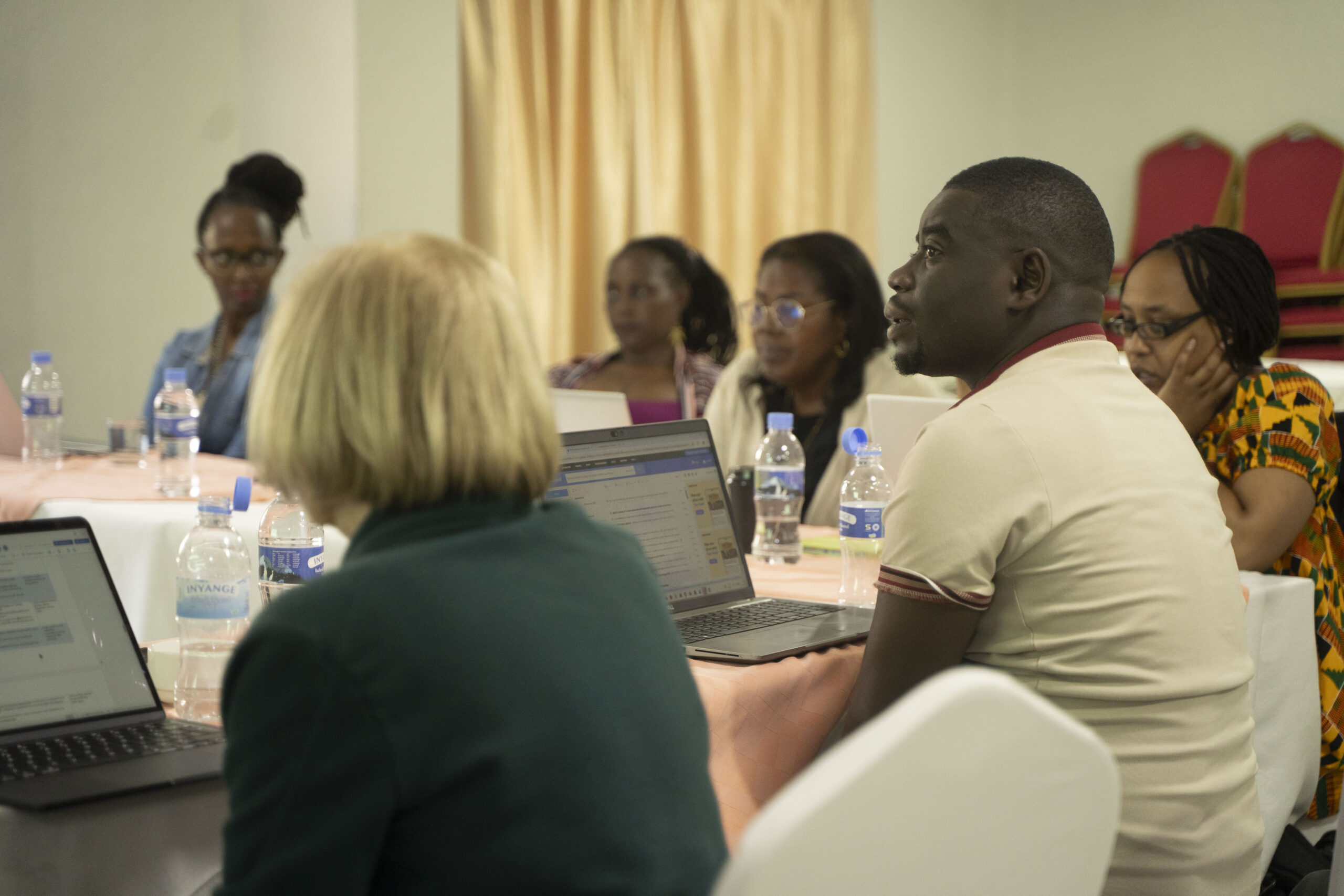
These reflections directly inform a regional co-writing process led by the Institute for Community Based Sociotherapy (ICBS), commissioned by the GIZ in support of the International Conference on the Great Lakes Region (ICGLR). Through collaborative writing, the process seeks to assess the impact of conflict on mental health and peacebuilding across ICGLR Member States and develop a regionally grounded guidance for integrating MHPSS into conflict prevention and peacebuilding efforts.