


Knowledge development
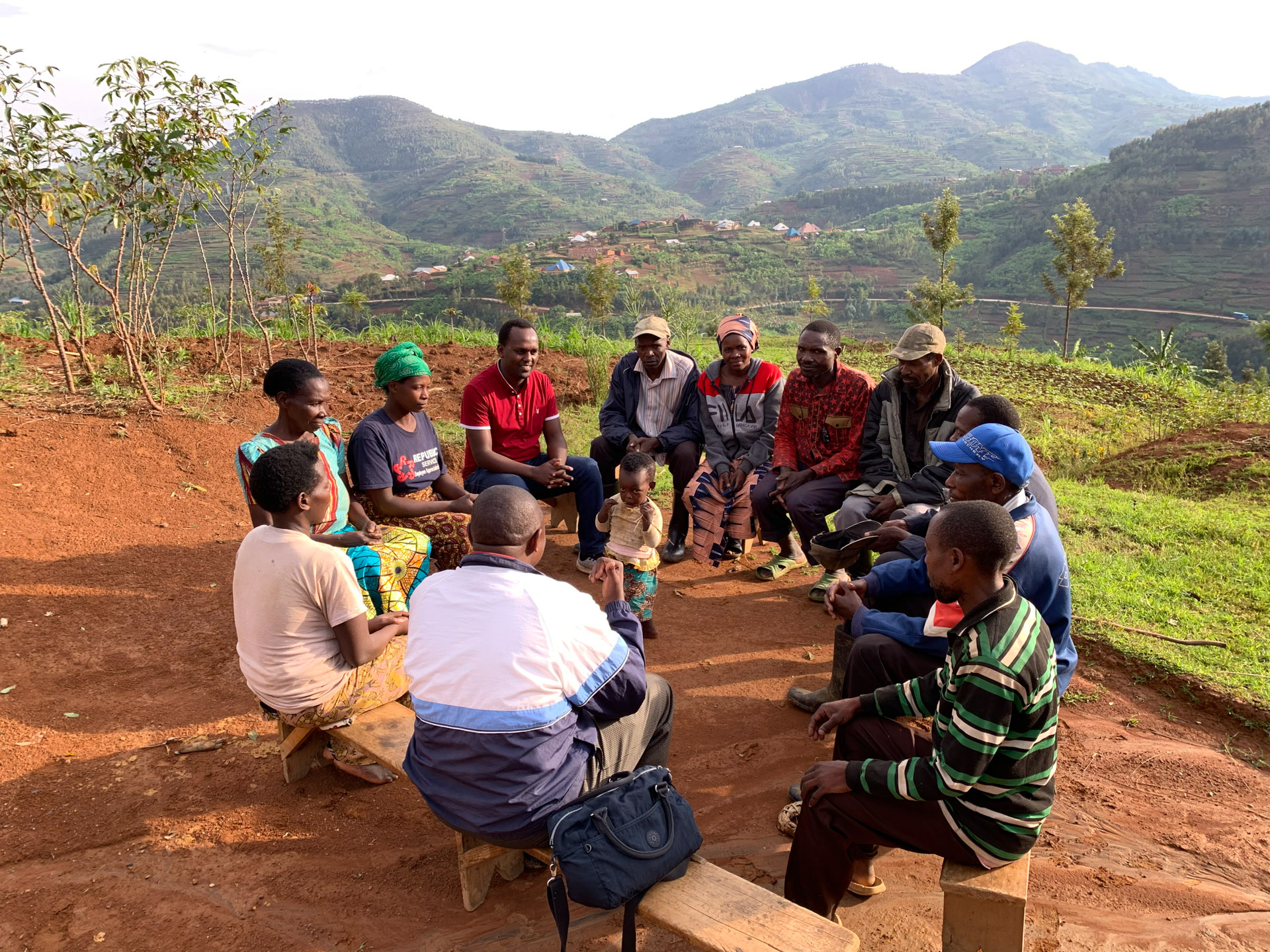
Community-Based Sociotherapy (CBS) is both a practical intervention and an evolving field of community-generated knowledge. At ICBS research and knowledge development are central to our mission to strengthen mental health, psychosocial wellbeing, and foster more peaceful communities. CBS was developed by and with local communities, our research follows the same principle: it is community-driven, context-sensitive, and aims to make community embedded knowledge visible and accessible. All or knowledge work is carried out in close collaboration with communities, CBS practitioners, and academic partners in the countries where we work.
Why Knowledge Development matters in CBS
Conflict and disaster-affected communities face complex social challenges. Understanding how CBS contributes to the lives of people is essential in ensuring that the CBS approach remains effective. As part of our knowledge development work, we therefore aim at:
- Understanding how and why CBS works and for whom.
- Studying community-defined change due to CBS, including ‘social dignity’, mental health and psychosocial wellbeing, peaceful attitudes and behaviours, social cohesion and improvements in gender and family dynamics.
- Support scale-up of the CBS approach through generating evidence.
- Strengthen local ownership by ensuring that communities and partner organisations shape the research agenda.
- Influence national, regional and global policies around community-led initiatives focusing on MHPSS and Peacebuilding.
Our Monitoring, Evaluation, Learning and Sharing Framework (MELS) provides the foundation for this work, guiding us in generating community embedded knowledge and evidence that strengthens the CBS implementation in different regions.
Our research approaches
Community-led and participatory research
ICBS prioritises knowledge generation from below. Communities, CBS facilitators, and local partners define community indicators, research questions and suitable research methods. Currently the “social dignity scale” developed by our partner, CBS Rwanda, is being used in our evaluation studies.
Mixed-methods evaluation
Whenever possible, we use contextually grounded clustered Randomised Controlled Trials (c-RCT’s) in combination with qualitative research methods, most significant change stories, and we work in partnership with national research institutions.
Societal issues
ICBS supports partner organisations implementing CBS in conducting societal issues studies that explore key MHPSS and Peacebuilding challenges faced by and in communities. These studies inform the continuous adaptation and strengthening of the CBS approach in terms of communal challenges to be addressed, while also generating evidence to engage policymakers, practitioners and other stakeholders who are working in the respective domains.
Implementation research
In collaboration with our national partner organisations, ICBS conducts implementation research to understand how CBS can be most effectively implemented, adapted and scaled in diverse contexts, while maintaining quality and local ownership. Together with partners, we examine factors such as acceptability, appropriateness, feasibility, fidelity and sustainability of CBS in real-time settings. The findings inform continuous improvement of the approach and support responsible scale-up.
Digitalised monitoring
ICBS has designed a monitoring system that is fully digitalised, improving accuracy of data, facilitating trend analysis and early identification of challenges. It helps in getting real-time data from the CBS groups, which supports in the monitoring of the groups, and gives an identification of the societal issues emerging in CBS.