
By Karangwa Diogene
During my recent visit to Burundi, I had the opportunity to spend time with our partner organizations, THARS and MIPAREC, and visit communities where community-based sociotherapy is being implemented. What stayed with me the most from this visit was not just the activities or meetings, but the changes I observed in people, and the way they spoke about those changes themselves.
From the beginning, I was impressed by our partners’ commitment and openness. Both organizations expressed strong interest in community-based sociotherapy and described it as an approach that actively engages people at the community level in healing and peacebuilding. What they found particularly striking was how quickly changes were becoming visible, not only to participants but also to local leaders, refugee communities, and host communities.
As these changes emerged, an important question kept coming up: how do we scale and sustain what is being achieved? The need is high, people are interested, and expectations are growing.
During one reflection session, the Executive Director of THARS shared something in Kirundi that deeply resonated with me:
“Maze kubona ko burya abantu bapfa umukeno.”
I realized that people suffer because of lack of attention to small things.
This insight captured much of what I was seeing in so many communities where I worked as a CBS practitioner. Many of the difficulties people described were not only linked to major life events, but to the long absence of being listened to, understood, and taken seriously. Community-based Sociotherapy seemed to respond precisely to this gap.
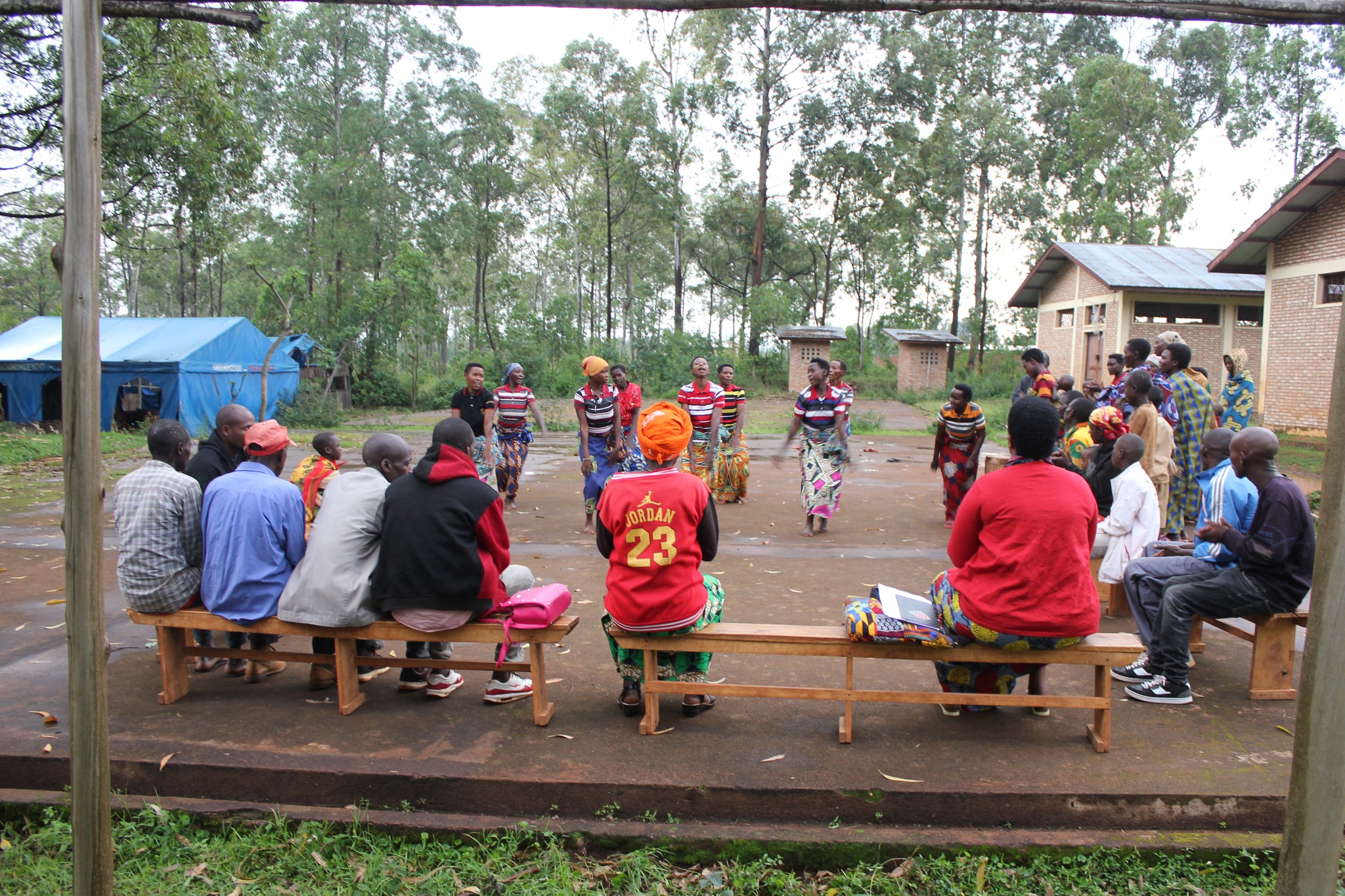
In the groups I visited, participants repeatedly said that what made the biggest difference was the space itself, a space where they felt listened to without being judged. Being with others who shared similar struggles reduced feelings of isolation and helped people feel safe enough to open up. This sense of safety allowed people to reflect on their emotions, their relationships, and their behaviors in new ways.
One sociotherapy group in Gitega expressed this experience through a slogan they chose for themselves:
“Tuvurane. Twese.” — Let us heal. Together.
I also witnessed these changes during the training of refugee facilitators from the Democratic Republic of Congo. During the basic training, many participants were highly reactive, quick to judge, and ready to defend themselves. Through the stories they shared, it became clear that years of war, loss, and displacement had left them in a constant state of alert.
When I returned for the intermediate training, the atmosphere was noticeably different. Participants were more patient, more open to listening, and more willing to empathize with one another. The tension that had dominated earlier sessions had reduced. It was clear to me that the establishment of safe spaces through community-based sociotherapy was allowing people to move away from the survival mode and begin relating to others in new ways.
Throughout my visits to sociotherapy groups, I heard testimonies that illustrated how these changes were extending beyond the groups themselves. People spoke about reduced anger, improved relationships within families, and renewed confidence. Some participants were chosen as community leaders, while others continued meeting as groups even after completing the 15 sociotherapy sessions, engaging together in social and economic activities.
What I learned from Burundi is that even small shifts, a moment of attention, a safe space to speak, a supportive group, can lead to significant change in people’s lives. Community-based Sociotherapy is not about dramatic interventions. It is about creating conditions where people can begin to heal, reconnect, and move forward together.
The question ahead is how to ensure that more communities can access these spaces, and how the changes already underway can be sustained over time.