


By Nadine Nirere
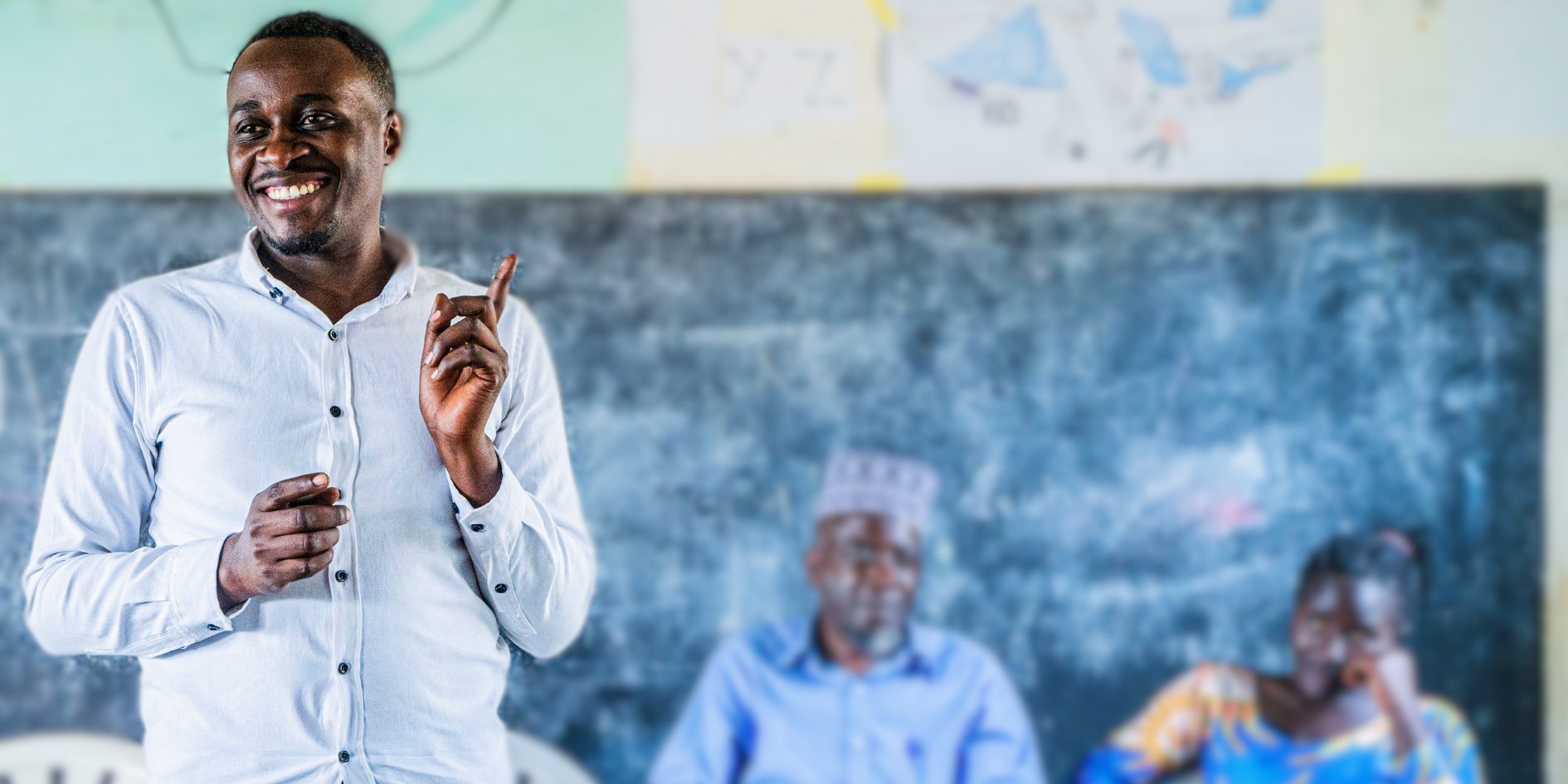
When Musengamana Vedaste first started facilitating Community-Based Sociotherapy, he was a university student who was not sure about his future. Today, at 26 years old, he has five years of experience with Community-Based Sociotherapy and works as an intern at the Center for Community Based Sociotherapy Rwanda (CBS Rwanda) at the district level in Rubavu, where he is involved in coordinating and overseeing sociotherapy groups and facilitators.
Vedaste started facilitating sociotherapy groups during his second year at the University of Rwanda, Huye Campus, while studying Clinical Psychology. At the time, he was uncertain about continuing in the field. He had been admitted to the programme without applying for it, and he felt that mental health was not widely recognized or valued in society. He was not sure what direction his studies would take him after university.
His experience with Community-Based Sociotherapy gradually changed this. Through working with people in sociotherapy groups, he began to see how many people experience mental health challenges and how important psychosocial support can be for individuals and communities. He also began to understand that his field of study could make a meaningful contribution to society. His confidence grew, and he became more committed to the profession. Together with other students, he also became involved in mental health awareness activities at the university and in local communities.
One of the experiences that had a strong impact on him involved a young mother who shared her story during a sociotherapy group. She had lost both of her parents at a young age and had been raised by her grandmother. As a teenager, she was sexually assaulted after losing consciousness when a drink she had been given was tampered with. She later discovered that she was pregnant. When her grandmother learned about the pregnancy, she was asked to leave home. She later gave birth to twins and struggled, having no stable income, no secure place to live, and the responsibility of caring for two children alone.
Vedaste said he was deeply shocked by what she had experienced and wondered what he could do to help someone facing so many challenges. At the same time, he saw her strength and resilience. Her story reminded him that there can be a great deal of pain behind what people show on the outside. It also strengthened his commitment to listen with compassion and support people without judgment. Even today, he sometimes calls her to ask how she and her children are doing.
Another experience that stayed with him happened when he was facilitating a group at the university. One of the members was his classmate, whom he had invited to join the group. At first, she was often absent or arrived late, and he assumed that she was not committed to the group. Around the fifth session, she shared that she had been experiencing severe emotional distress and had attempted suicide three times. She was also repeating an academic year because she had not met the requirements to progress.
The disclosure changed Vedaste's understanding of what he had been seeing. With the support of the group, his classmate gradually regained hope and confidence. She became happier, more engaged in class, and less isolated. She eventually progressed in her studies, and the two of them graduated together. For Vedaste, seeing this change showed him the importance of creating safe spaces where people can speak about what they are experiencing.
His work later took him beyond the university. After his experience as a facilitator, Vedaste began an internship as a district officer in Rubavu, where he became involved in coordinating and overseeing sociotherapy groups and facilitators. His experience as a facilitator gave him a strong foundation for this new role. He already understood the sociotherapy approach and had developed skills such as active listening, empathy, problem analysis, asking appropriate questions, managing group discussions, encouraging participation, and creating safe and respectful spaces.
Moving into district-level work also required him to develop new skills in management and coordination. He had to work with sociotherapists who were much older than him, some of whom he regarded as being like parents to him. His previous experience as a facilitator helped him build credibility and gain their trust and respect.
Working from both perspectives has helped Vedaste understand Community-Based Sociotherapy more deeply. As a facilitator, he learned that many people carry pain that others cannot see. He describes this through a Kinyarwanda proverb that says, “The tears of a man flow in his belly.” Through his experience, he came to understand that these hidden tears are not limited to men. Many people silently carry wounds, fear, loneliness, and painful experiences.
For Vedaste, one of the most powerful parts of sociotherapy is what happens when people are given a safe space to speak. Their problems do not suddenly disappear, but they can finally share what they have been carrying with someone who is willing to listen without judgment. He says that sometimes people need to hear that they are not alone and that someone understands them. For him, this is where healing can begin.
At the district level, his work has also taught him the importance of supporting facilitators, coordinating activities, following up on groups, solving problems, and helping ensure that the sociotherapy process is implemented effectively. He has come to understand that what happens during the sessions and what happens behind the sessions are both important. At the same time, he believes that sociotherapists are the people who experience the essence of the approach most directly because they sit with people, listen to their pain, witness their transformation, and walk with them through the process.
His experience in Rubavu has also changed how he understands peacebuilding. Vedaste says that peace is more than the absence of war or open conflict. People can live without visible conflict and still carry unresolved pain, trauma, loss, broken relationships, and conflict within their families. For him, peacebuilding also means creating opportunities for people to heal, rebuild trust, forgive, and restore relationships.
He has also learned that supporting communities does not always require expensive materials or complicated interventions. Sometimes, a simple gesture, a listening ear, an encouraging word or a meaningful group activity can make a difference. Through his work, he has also seen that communities have a great deal of strength, wisdom and knowledge.
“My role as a facilitator is not to bring all the solutions to a community, but to help create the conditions in which people can recognize their own strengths and find their own solutions.” He explains.
One experience from his current work has particularly stayed with him. During a visit to a sociotherapy group that had graduated about ten years earlier, Vedaste expected to find a group that had completed its sessions and moved on with life. Instead, he found that the members were still connected and supporting one another. They remembered what they had learned together, and the principles of trust, mutual support, and solidarity were still present in their relationships.
When one member experienced a problem, others would visit and support them. The group had also continued working together economically. They had bought a sheep for each member and were keeping five cows together. What had started as a sociotherapy group had continued as a community of people who cared for and supported one another long after the formal sessions had ended.
One part of the visit affected Vedaste especially deeply. One of the group’s original members had passed away, and her child had come to take her place. He knew how important the group had been to his mother and understood what she had gained from it. Seeing him continue what his mother had started made Vedaste reflect on the long-term impact of sociotherapy.
He says that trauma is often discussed in terms of how it can pass from one generation to another. But through this experience, he also saw that resilience, healing, trust and solidarity can be passed from one generation to the next. For him, the experience showed that the work done in sociotherapy sessions can continue long after the sessions have ended.
Vedaste believes young people have an important role in building peaceful communities because they are both part of the present and the future of society. Young people are also highly connected through technology and social media. He recognizes that these platforms can be used to spread misinformation, hate speech, bullying, and violence. Still, he also believes young people can use them to promote respectful dialogue, tolerance, and positive engagement.
For him, empowering young people with values of peace, empathy and responsibility can contribute to stronger and more resilient communities. His own experience has shown him that young people can take on meaningful roles in mental health, community healing and peacebuilding.
Working with people who have experienced deep pain has also taught Vedaste about hope. He finds encouragement in knowing that many people who have faced difficult experiences have eventually found strength and hope. He also finds hope in people who choose to seek support. For him, asking for help can show that a person wants to change and move forward, even when the journey is difficult.
After five years of working with Community-Based Sociotherapy, Vedaste says one of the lessons he will carry throughout his life is the importance of small acts of kindness. A word of encouragement can bring hope to someone who is struggling. Listening, spending time with someone, and showing empathy can make a meaningful difference. He has learned that people do not always need material support; sometimes genuine human connection is what they need most.
His message to young people is to be patient with themselves and not to compare their lives with those of others. He believes that everyone has a different journey and that success comes at different times. He encourages young people to focus on their goals, recognize their progress, and remember that every step forward matters.
Vedaste's own journey reflects this message. He began as a young university student who was uncertain about his future. Through Community-Based Sociotherapy, he discovered a field where he could contribute to the well-being of others. His experience as a facilitator later became part of the foundation for his work supporting sociotherapy at the district level.
Today, he continues to see the importance of creating spaces where people can speak, listen to one another, and find strength within their communities. For Vedaste, this work has shown him that healing can happen through human connection and that the relationships built through sociotherapy can continue long after the formal sessions have ended.
On International Youth Day, his story is one example of how young people are already contributing to healthier, more connected, and more peaceful communities.