


By Angela Jansen
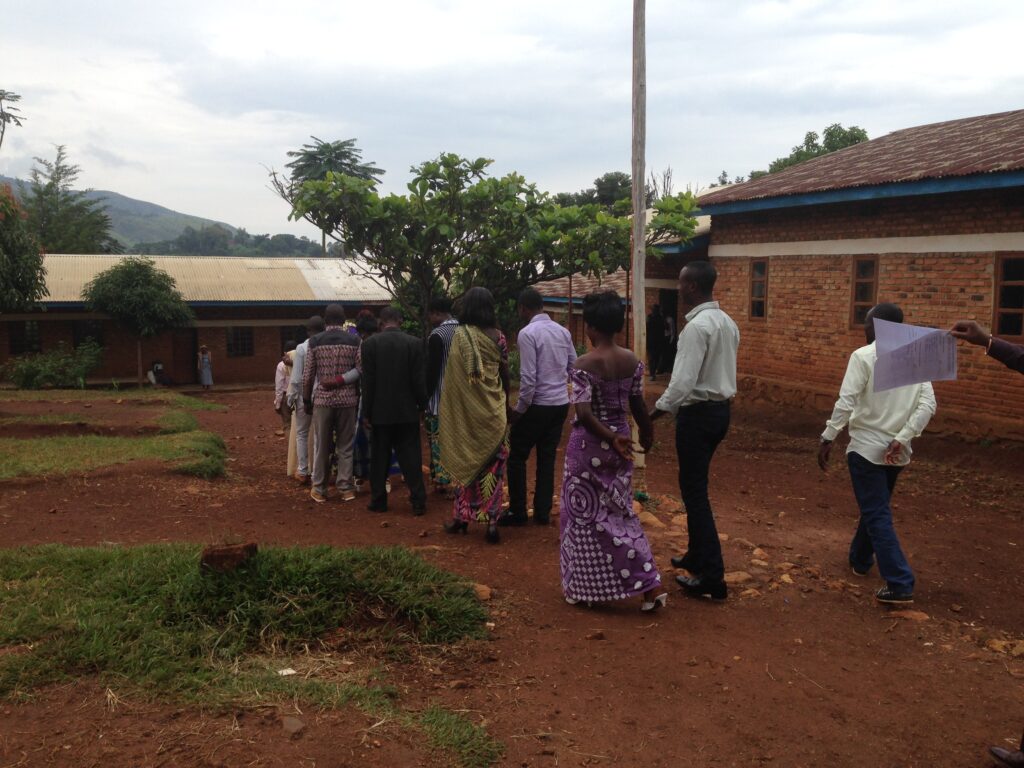
During a Community-Based Sociotherapy (CBS) training some years ago in Kalehe Territoire, the Democratic Republic of Congo (DRC), a CBS facilitator working with ICBS’ partner organisation Paix and Développement Durable (PDD), reflected and said: “You brought this method, but we brought the meaning.” Without intending to, he was describing exactly what ICBS strives for. Neither he nor de CBS trainer holds the full picture alone, they each hold a part of the knowledge and experience that is needed for the CBS approach to work.
For ICBS, strengthening CBS is not simply a matter of building the capacity of other actors, it is a matter of bridging it. The language of capacity building can suggest that knowledge moves in one direction: from those who have expertise to those who lack it. ICBS works from a different understanding. In every context where CBS is introduced, knowledge already exists. In communities, partner organisations, CBS facilitators, including and especially the people with lived experience of violence and war.
Capacity bridging therefore reflects a more reciprocal way of working. It recognises that ICBS brings methodological experience, quality standards, training approaches and learnings from different country contexts, while new partners bring deep cultural knowledge and understanding and practical experience of what works in their own communities. The task is not to replace one form of knowledge with another, but to create bridges between them and co-design the CBS implementation in a contextually appropriate way.
This philosophy is inseparable from the essence of CBS itself. Sociotherapy is grounded in growing evidence that healing is not an individual matter but is shaped through relationships and embodied experiences of feeling safe or threatened. It therefore requires to not only have attention for individual distress, but more so to the relational conditions that support recovery, including the experiences of safety, trust, care and respect, which can eventually lead to an increased sense of ‘social dignity’.[1] Approaching each other as equals in the CBS group and learning from each other, whereby each one’s experience holds a certain wisdom which provides new insights to someone else.
In practice, this approach is reflected in ICBS’ work with partner organisations across different countries: through joint training and accreditation trajectories, multi-country research collaboration and reflection meetings. It enables partners to strengthen the quality of CBS implementation while also advancing knowledge of CBS within the wider CBS community of expertise through their experience with contextualising the CBS implementation. In this way, ICBS does not position itself as the sole holder of expertise, but as a knowledge connector.
Capacity bridging is therefore both a philosophy and a practice. It supports locally grounded ownership over CBS and contributes to a more horizontal way of working. By bridging capacities across people and organisations that work in different contexts, ICBS aims to nurture a learning ecosystem in which CBS can continue to remain meaningful for the communities it serves.
[1] In the context of Community-Based Sociotherapy, social dignity is understood as a relational experience: people regain a sense of dignity when they feel recognised, listened to, included and able to participate meaningfully in family and community life.